


Workplace errors usually come from how people work, not how hard they try. Employees repeat the same tasks for hours, switch between apps all day, and make decisions with information that may be out of date. In connected systems, one wrong number or outdated document can spread well beyond where it started.
AI reduces human error by taking over repetitive work, checking systems for problems as they happen, and giving employees current information when they need it. This post covers five ways AI reduces mistakes at work, where errors come from, how industries use AI, and the guardrails that keep it accurate.
5 Ways AI Reduces Human Error at Work
- Automating repetitive tasks — Repetition breeds inattention, and inattention breeds mistakes. AI handles data entry, invoice matching, and scheduling without fatigue, eliminating errors that multiply across thousands of daily transactions.
- Pattern recognition at scale — No human team can review millions of records for subtle anomalies. Machine learning flags the outlier transaction, the misconfigured system, or the misfiled document long before anyone would notice.
- Real-time monitoring — Human audits leave gaps that let errors grow and compound unchecked. AI watches data streams continuously and alerts teams the moment something deviates, closing the gap between error and correction.
- Consistent, unbiased decisions — Human judgment varies with mood, fatigue, and experience. AI applies the same logic every time — whether reviewing the hundredth job application or the thousandth product inspection — without degrading at scale.
- Augmented decision-making — Most workplace errors start with incomplete or outdated information. AI surfaces verified, contextual insights at the point of decision — through meeting summaries, enterprise search, and forecasting tools — so employees act on facts, not assumptions.
Why Human Error Is Still a Billion-Dollar Problem
Human error remains one of the biggest risks to productivity and compliance — and the more interconnected our systems become, the further a single error can travel. A typo in a spreadsheet or a misfiled document doesn’t stay contained; it cascades.
The stakes are significant across every industry:
- According to IBM’s 2024 Cost of a Data Breach Report, the average data breach now costs organizations $4.88 million — and human error is a contributing factor in approximately 74% of all breaches.
- The McKinsey Global Institute’s automation research finds that 45% of work activities could be automated using existing technology — with data collection and processing tasks, where human error rates are highest, representing the largest share of that opportunity.
The same tasks most vulnerable to human error are also the most automatable — which is where AI makes its biggest impact.
Human error itself rarely happens at random. The most common causes include:
- Distraction and fatigue — lapses in focus during long or tedious work
- Information overload — employees switching between dozens of apps daily
- Manual processes — copying data or updating spreadsheets by hand
- Miscommunication — caused by inconsistent documentation or lost messages
- Weak cybersecurity practices — including reused passwords or missed updates
AI changes this dynamic. Rather than relying on people to manually detect or correct errors, AI systems monitor, predict, and prevent them — automatically.
Understanding the Root of Workplace Mistakes
To understand how AI reduces human error, it helps to recognize where mistakes come from. Psychologists generally classify them into three categories:
- Skill-based errors — slips or lapses during routine tasks (e.g., clicking the wrong button). AI addresses these through automated guardrails and validation checks that catch slips before they propagate downstream.
- Rule-based errors — following an incorrect procedure or misapplying a known rule. AI reduces these by encoding correct procedures directly into workflows, making the right path the default and the wrong one harder to take.
- Knowledge-based errors — poor decisions caused by missing or misunderstood information. AI addresses these by surfacing verified, up-to-date context at the moment of decision — through enterprise search, meeting summaries, and recommendation systems — so employees act on facts, not gaps.
How AI Reduces Human Error: The 5 Core Mechanisms
AI minimizes mistakes through a mix of automation, machine learning algorithms, pattern recognition, and feedback loops. Here’s how each mechanism works in practice.
1. Automating Repetitive and Routine Work
Humans are most likely to make mistakes during repetitive, low-judgment tasks. AI algorithms excel at automating those processes, from data entry to invoice matching.
- In finance, AI models automatically reconcile records and detect fraud, eliminating manual mis-keying.
- In HR, tools like GoProfiles automatically celebrate milestones, recognize achievements, and reinforce connection across teams.
- In marketing, AI manages ad bidding and budget pacing in real time, keeping campaigns accurate without constant human intervention.
Automation reduces cognitive load, prevents burnout, and dramatically lowers the overall error rate.
2. Identifying Patterns Hidden in Massive Data Sets
Humans can’t process every signal in today’s complex data landscape. AI leverages advanced machine learning algorithms to analyze millions of records and identify patterns that would otherwise go unnoticed.
- In manufacturing, predictive maintenance tools detect subtle vibrations that forecast mechanical failure.
- In healthcare, diagnostic AI reviews imaging data and highlights anomalies for clinicians to verify.
- In knowledge-driven companies, AI-powered search tools uncover missing or outdated files across Slack, Confluence, Google Drive, and SharePoint — ensuring teams act on verified information.
These insights allow organizations to fix small inconsistencies before they turn into large-scale errors.
3. Monitoring Systems in Real Time
Unlike periodic human reviews, AI continuously monitors data streams for anomalies and alerts teams the moment something appears out of the ordinary.
- In cybersecurity, AI detects unusual login patterns or credential misuse instantly.
- In logistics, algorithms flag delivery delays or inventory mismatches before they affect customers.
- In customer support, sentiment analysis pinpoints when conversations are deteriorating, allowing proactive intervention.
This real-time detection closes the gap between error and correction — improving uptime, accuracy, and reliability.
4. Reducing Bias and Inconsistency
Even highly skilled employees can introduce unconscious bias or inconsistent decisions. Properly governed AI helps reduce those risks:
- Recruiting — AI-powered platforms analyze candidate profiles to match skills with job requirements and ensure every applicant gets a fair, consistent experience.
- Quality control — Computer vision systems inspect every product with objective standards, eliminating human fatigue.
- Compliance — NLP-powered systems automatically scan policies, contracts, and communications for potential risks or violations.
By applying the same logic repeatedly, AI systems deliver consistent, unbiased results — an essential safeguard in regulated industries.
5. Supporting Smarter, Data-Driven Decisions
AI doesn’t just automate — it augments human judgment. Using advanced analytics, retrieval-augmented generation (RAG), and contextual recommendations, AI gives employees fast, verified insights that improve decision quality.
- AI assistants summarize meetings, highlight action items, and draft follow-ups, reducing forgotten details.
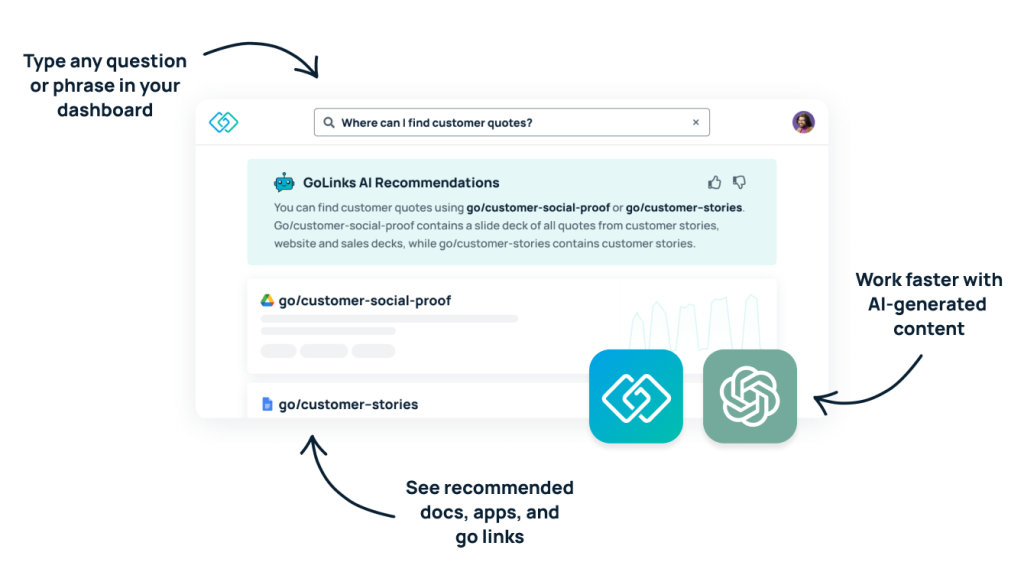
- AI search platforms combine enterprise data sources into a single search bar, surfacing relevant answers instead of endless documents.
- Forecasting models in sales and operations provide confidence ranges and predictive alerts, minimizing reliance on gut instinct.
The result: decisions grounded in data, not memory — dramatically lowering the risk of error.
Human Error vs. AI-Assisted Processes
The difference between manual processes and AI-assisted ones isn’t marginal — it’s structural.
| Factor | Manual / Human Process | AI-Assisted Process |
| Error rate | High — increases with fatigue, complexity, and volume | Low — consistent regardless of volume or time of day |
| Speed | Limited by human cognitive bandwidth | Processes thousands of records per second |
| Consistency | Variable — depends on individual skill and focus | Uniform — same logic applied every time |
| Anomaly detection | Reactive — errors caught after the fact, if at all | Proactive — flags deviations in real time |
| Scalability | Requires proportionally more headcount | Scales without additional error risk |
| Bias | Subject to unconscious bias and mood | Neutral (when trained on unbiased data) |
| Cost of failure | High — downstream cascading errors, compliance risk | Lower — errors caught earlier with less impact |
GoLinks: Eliminating Errors at the Knowledge Layer
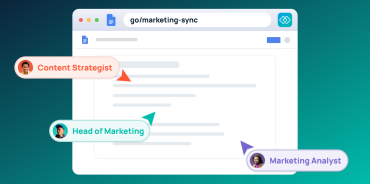
A common scenario: an employee searches for the company’s expense policy, finds a stale link in an old Slack message, submits a reimbursement incorrectly, and triggers a correction cycle that wastes everyone’s time. GoLinks prevents this at the source. When go/expense-policy always resolves to the current, canonical document — and GoLinks AI can answer “what’s our meal reimbursement limit?” directly — there’s no opportunity to act on outdated information. The error never happens.
How AI Reduces Human Error Across Key Industries
Finance
Machine learning models detect suspicious transactions faster than human auditors, ensuring compliance and reducing manual oversight errors. According to IBM, organizations using AI and automation in security identify and contain breaches an average of 108 days faster than those that don’t.
Customer Service
Generative assistants use retrieval-based models to maintain up-to-date, verified responses, reducing the rate at which agents provide customers with incorrect or outdated information. In one widely cited deployment, a major retailer saw a 25% drop in repeat inquiries within the first month — a strong signal that customers were getting accurate answers the first time.
Human Resources
AI in HR automates the data-heavy work — validation, payroll reconciliation, sentiment tracking — where manual processes are most error-prone. GoProfiles adds a generative AI layer that helps teams find and act on accurate people data, with built-in guardrails for privacy and fairness.
Healthcare
In healthcare, the stakes of human error are uniquely high. AI diagnostic tools flag anomalies before they become missed diagnoses, and with the WHO estimating that half of all medical errors are preventable, AI-assisted clinical decision support is increasingly central to closing that gap.
The Technology Behind Error Reduction
Several core technologies work in combination to detect and prevent human error. Each targets a different failure mode:
- Machine Learning — detects anomalies and predicts outcomes by learning from patterns in historical data
- Natural Language Processing (NLP) — interprets text and speech to reduce miscommunication and flag compliance risks
- Computer Vision — identifies physical defects or hazards that human inspectors might miss
- Predictive Analytics — surfaces leading indicators of failure before an error occurs
- Reinforcement Learning — continuously improves system behavior based on outcomes and feedback
No single technology eliminates human error on its own — the impact comes from how these capabilities compound.
Guardrails: Keeping AI Safe and Accountable
AI that isn’t governed carefully can introduce errors of its own — biased outputs, opaque decisions, or models that drift from real-world conditions over time. Responsible deployment requires guardrails:
- Explainability — systems surface how each decision was reached, so humans can verify and challenge outputs
- Human-in-the-loop — people retain approval authority over high-stakes outcomes
- Bias testing — training data is audited for fairness before models go live
- Data quality controls — garbage in, garbage out; clean inputs are non-negotiable
- Continuous monitoring — models are retrained as conditions change, preventing silent drift
These guardrails don’t slow AI down — they’re what makes it trustworthy enough to rely on.
The Human-AI Partnership
The future of accuracy isn’t humans versus machines — it’s humans with machines. AI contributes speed, scale, and consistency. Humans contribute context, judgment, and accountability.
The distinction matters: an AI model might flag an accounting irregularity, but a finance professional decides whether it’s fraud or a timing error. That division of labor — machine detection, human judgment — is what makes AI-assisted work both more efficient and more trustworthy than either alone.
What Gets in the Way of AI Adoption
AI adoption doesn’t fail because the technology doesn’t work — it fails because the conditions around it weren’t ready. Common barriers include:
- Poor or biased training data — models are only as reliable as the data they learn from
- Employee resistance — fear of automation is real, and ignoring it accelerates it
- Legacy system complexity — integrating AI into existing infrastructure takes more time than most organizations plan for
- Ongoing maintenance — models drift; both the technology and the people using it need continuous investment
Organizations that invest in transparency, change management, and ongoing maintenance see faster adoption and stronger ROI.
The Future: Continuous Learning, Fewer Mistakes
The next wave of AI doesn’t just catch errors faster — it’s designed to prevent them entirely. Emerging capabilities include:
- Generative AI copilots — assist employees in real time, flagging potential mistakes as work happens rather than after
- Voice-driven systems — verify intent before executing commands, adding a confirmation layer to high-risk actions
- Multimodal AI — combines speech, text, and vision to catch errors that slip through single-channel systems
- Digital twins — simulate real-world operations to identify failure points before they occur in production
Each capability moves AI from catching mistakes to making them less likely in the first place.
Accuracy Is a Competitive Advantage
At its core, AI reduces human error by doing three things well: automating routine work, surfacing patterns humans miss, and enforcing guardrails that keep systems honest. AI-powered systems make work faster, more accurate, and more reliable — without depending on human consistency alone.
AI doesn’t replace people. It removes the conditions that make people error-prone. In an age where accuracy equals trust, the organizations that harness AI responsibly will be the ones that thrive.
Bad decisions often start with outdated information. GoLinks gives every critical doc a short, memorable link, so your team reaches the current version on the first try.
Access and share resources instantly with GoLinks
Try for free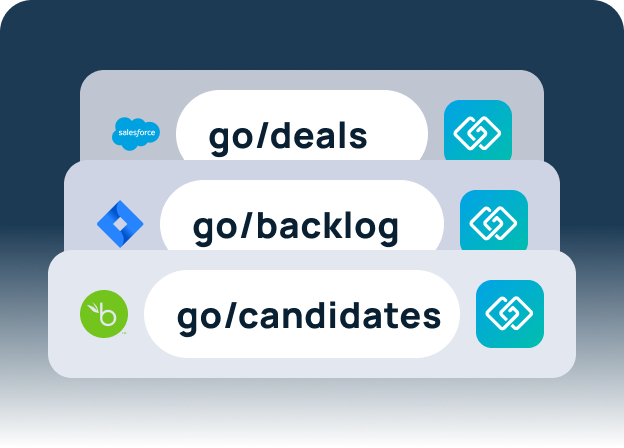
Frequently Asked Questions: How AI Reduces Human Error
In healthcare, AI reduces error through clinical decision support tools that flag abnormal lab results, imaging anomalies, and drug interaction risks before a fatigued clinician might miss them. It also automates documentation, cutting the transcription errors that contribute to a significant share of adverse medical events. These systems are designed to assist clinical judgment, not replace it — a physician still makes the final call.
AI reduces data analysis errors by automating data cleaning, detecting outliers, and validating inputs before they enter downstream models. Where a human analyst might overlook a formatting inconsistency across thousands of rows, an AI pipeline catches it immediately — at the source, before flawed data shapes a report or decision.
In manufacturing, predictive maintenance tools detect subtle equipment anomalies — vibrations, temperature shifts, output irregularities — before they cause failures. Computer vision systems inspect products at scale with consistent, objective standards, catching defects that human inspectors miss due to fatigue or distraction. The result is fewer production errors, less unplanned downtime, and more reliable quality control.
In finance, AI automates transaction reconciliation, flags anomalies in real time, and detects fraud faster than human auditors can. According to IBM, organizations using AI and automation in security identify and contain breaches an average of 108 days faster than those that don’t — a gap that directly translates to lower exposure and fewer downstream errors.
Yes — and acknowledging this matters. AI systems can produce hallucinations (confident but incorrect outputs), amplify biases in training data, and fail unpredictably on edge cases they weren’t built for. Responsible deployment always includes human oversight, explainability features, and continuous monitoring. The goal isn’t to replace human judgment with AI judgment — it’s to use each where it performs best.
AI excels at preventing errors that are high-volume, repetitive, or data-intensive — duplicate data entry, missed anomalies in large datasets, broken internal links, scheduling conflicts, and cybersecurity threats. It’s less effective where errors require contextual, ethical, or interpersonal judgment, where human oversight remains essential.